• Home
  • Membership
  • History
    • ABWH Officers
    • About ABWH
  • Events
    • Luncheon Speaker
    • African American NPS Sites
    • TRUTH
  • Awards
    • Letitia Woods Brown
    • Drusilla Dunjee Houston
    • Lorraine A. Williams
    • Lillian Hornsby
    • Rosalyn Terborg-Penn
  • News
    • ABWH Statement - Django Unchained Action Figures
    • Call for Papers
    • Interview - "The Help Goes International"
    • ABWH Members in Print and Media
  • ABWH Cart
  • Contact
    • Web Links
  • 0
Wednesday, June 19, 2013
Member Login

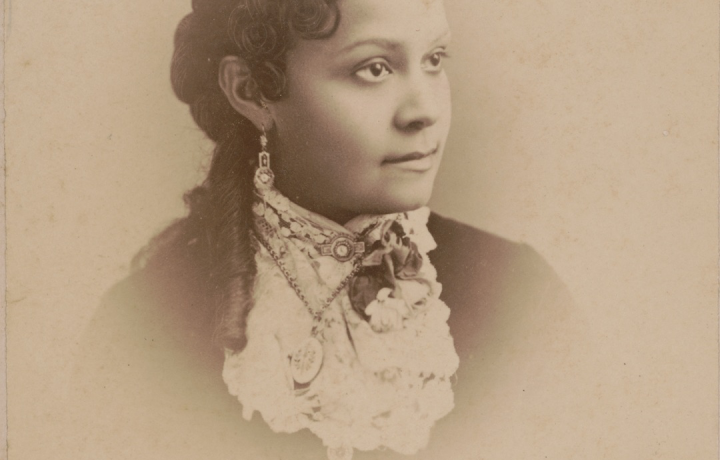
Letitia Woods Brown (1915-1976)

Letitia Woods Brown

“Something for me, my family, the race and mankind: Letitia Woods Brown, 1915-1976” by Ida E. Jones, Ph.D.

Letitia Woods was born in Tuskegee, Alabama on October 24, 1915 to Evadne Adams and Matthew Woods. She was the middle of three sisters. The Woods family had a long history in education. Her maternal great grandfather Lewis Adams “one of conceiver and founders of Tuskegee Institute.” Her parents Evadne and Matthew were both instructors at Tuskegee. Her life revolved around the intellectual pursuits of student life at Tuskegee, yet she vowed from age 12 to 20 not to become a teacher or a wife. Letitia believed boys were fun for games and sports, but housekeeping was completely unrewarding. Naturally she attended Tuskegee and graduated with a Bachelor of Science in 1935. Letitia wrote that “the adults in the family seemed to be obsessed with getting the race educated.” (Grandma’s Corner, by Lucy Murray) Upon completion of her degree and looking for work, teaching was the only option. She accepted a position at the Macon County School. Her first class was 3rd and 4th graders.

Letitia wrote: “The rural black school in the segregated post-depression era was deprived by any standard. There were never enough books and the teacher had to provide her own chalk, paper, pencils, curtains and firewood...When the colored schools gave out in early spring, my parents and I agreed that at $300 a year I wasn’t really supporting myself so I might as well go back to school.”(Redcliffe Quarterly, March 1974)

Driven by a need to better her lot in life, Letitia matriculated to Ohio State University in the mid-1930s to pursue a Master’s of Arts in history. During the course of her program her academic advisor openly questioned why an African American woman would be interested in obtaining a graduate degree “since everyone knew that Negroes didn’t have the intellectual ability for academic pursuits.” (Grandma’s Corner, by Lucy Murray) The snide remarks did not impede Letitia while at OSU she joined the NAACP Youth Council’s sit-ins at restaurants that refused service to Blacks. Letitia wrote “Irritated with our lack of success there and the intransigence of discriminatory policies at the University - dormitory exclusion - we planned how when we finished we would work a year, save all our money, and get outside of the United States to breathe free air.” (Radcliffe Quarterly, March 1974) This stereotype suffered a bruised ego when in 1937 Letitia graduated with her MA in history. To heal the scrapes of racism, in 1938 Letitia and a group from OSU went to study Caribbean history and literature in Haiti. This first documented trip outside of America awakened a deep intellectual curiosity within Letitia. She wrote “That trip was my first sally forth to see the world. I loved it.”(Radcliffe Quarterly, March 1974)

The travel abroad and the M.A. afforded Letitia access to the college classroom as an instructor. Leaving Ohio for Alabama then Tennessee, she began teaching at Tuskegee and Lemoyne College. “As World War II played havoc with my social life in the 40's I discovered a growing serious commitment to college teaching. Preparing for the classes in world history I taught at Tuskegee and Lemoyne. I had a chance to explore more deeply what societies and cultures other than the American were like. Some of the black colleges stressed world history rather than modern civilization in an attempt to broaden the base of understanding and stave off development of a totally Eurocentric view of the world.” (Radcliffe Quarterly, March 1974)

In 1945 unsatisfied with mediocrity, Letitia took additional classes at OSU in geography and eastern history. Ultimately, she left the south for Cambridge, Massachusetts to attend Harvard University where she sought a Ph.D. in History.

While pursuing her degree, Letitia met Theodore Brown a doctoral student in the field of economics. Letitia and Theodore Brown were married in 1947. They would have probably married earlier but Letitia was determined to complete her course work - which involved oral exams. In 1947 the couple moved to Harlem, Theodore’s hometown. Letitia wrote “I researched around in Columbia University Library and the New York Public Library until I dropped everything for Dr. Spock. Noisy nonverbal babies had me thoroughly intimated for a while.” (Radcliffe Quarterly, March 1974) Within three years of marriage Theodore E. Brown, Jr. then Lucy Brown Franklin a short time later. Although Letitia resigned herself to being a mother and wife she still desired more for herself. She got involved with community projects, served on the local Health and Welfare Council and attended the local PTA meetings where they were organizing a campaign to force the City Council in Mt. Vernon New York to construct a neighborhood playground from an existing dump. Letitia wrote that both children were “dragged around to meetings with me between their naps, she hauled bother children off to see Peter and the Wolf.(Radcliffe Quarterly, March 1974)

Tenuous struggle to answer the deep calling of intellectual pursuits had to be balanced with motherhood. There were times on Saturday nights that three or four couples would gather and discuss “the race problem.”

“At one point the plan we projected for electing a black to the County Board of Supervisors sounded so convincing we decided we really ought to try it...we all pitched in to help, with the wives running the campaign because of their more flexible schedules. To our surprise the plan worked: Harold Wood won the election to become the first black to serve on the Westchester County Board of Supervisors.” (Radcliffe Quarterly, March 1974)

The Brown’s left New York for Washington, DC in the late 1960s, however, the New York era had been instructive for Letitia. “The stay in Mount Vernon taught me, that practical keys to pursuit of a career were, limit the family size, so everybody’s on his own at some point; and cut the travel time to a minimum.”(Radcliffe Quarterly, March 1974) The move to Washington, allowed Letitia to complete her dissertation research and exercise her passion for college teaching at Howard University.

Washington, DC in late 1960s was a whirlwind and Howard University the eye of the storm. The demand of Howard students that all course employ an Afrocentric perspective frustrated a number of faculty at the university. Letitia wrote “The constant challenge to justify what you were teaching was irritating and unsettling. But one day I found myself repeating “why am I teaching this? How does it really help the young to understand the world they live in?”(Radcliffe Quarterly, March 1974) The advent of the civil rights movements renewed a sense of radicalism within Letitia. The frustrations she encountered in OSU and the lack she endured when teaching in Macon County impelled her to move beyond the rhetoric of history to the deeper truths. Her job would now be one to destroy the specious argument without destroying the student to work out a new balance between what students want to know and what we want to teach them.

The move to Washington awakened a dormant aspect of Letitia, the condition of Black people. While completing the research for her dissertation, she became enthralled with the role of free and enslaved Black people in the Nation’s Capital. The social and cultural, academic and private lives of these people intrigued her. Lucy in writing about her mother’s obsession with Black Washington resulted in: “my brother and I [spending] our summers in Tuskegee with my grandparents and aunts, freeing up out mother’s time to work on her dissertation. During the school year, in addition to raising a family, she taught at Howard and George Washington, was active in professional organizations...I have vivid memories of her organizing and reorganizing hundreds of thousands of note cards on which she had written her research and rewriting numerous drafts of her dissertation.” (Grandma’s Corner)

In 1966, over 18 years after she entered the program, Letitia completed her Ph.D. in history from Harvard University. She was the first Black woman to earn a Ph.D. in History from Harvard. [The one article mentioned this fact - however, I was unable to substantiate it] She entered Harvard a single woman at the age 30 in 1945 when she started her degree and graduated as a grandmother of age 51 she completed her doctorate.

The completion of her degree gave her carte blanc to the world. In 1968 a Fulbright fellowship landed her in Monash and Australian National University. “The speaking circuit booked for me by the Australian-American Educational Foundation took me to all kinds of groups I would never have found by myself. And never before in my life had I been so conscious I was female.” (Radcliffe Quarterly, March 1974) When returning to America she travelled throughout southeast Asia, Singapore, Jaipur, Angkar Wat, Istanbul, and southern Europe Rome, France and Italy. These travels in her opinion would help her “live” world history through the museums, ruins, libraries and people. In 1972 she travelled to Africa: Gao, Segou, Timbuktu, Ibandan, Benin, Kumasi, Luxor, Khartoum, Cairo, Marrakesh, Fez, Axum. After these travel she concluded that western civilization was a worm’s eye view of the world.

During her peripatetic travels, she left her family in America. “My family accepts my wanderings because they are lone travelers, too. After years of vacations together, we were relieved to find nobody’s feelings were hurt if each went his own way at times, to pursue his own interests.”(Radcliffe Quarterly, March 1974)

The remainder of her life would be in Washington, DC. She published work about the free Black population in Washington, and co-curatored an exhibit at the National Portrait Gallery entitled “Washington from Banneker to Douglass 1791-1870" with Howard historian Dr. Elise Lewis. In 1972 her dissertation was published as a book Free Negroes in the District of Columbia, 1790-1846. Her passion for alternative “telling of history,” landed her as the primary consult to the Schlesinger Library Black Women History Project at Radcliffe that include the oral histories of 72 Black women of note in a various fields.

On August 1976 at the age of 60 Letitia Woods Brown died after a bout with cancer. Lucy in writing about her mother said “my mother died too early at age 60, but her name and her work have been memorialized by her colleagues.” (Grandma’s Corner) The Historical Society of Washington, DC named their annual history lecture The Letitia Woods Brown Lecture; George Washington University established The Letitia Woods Brown Fellowship in African American History and Culture and the Association of Black Women Historians, under the presidency of Nell Irvin Painter in 1983 named their chief book prize The Letitia Woods Brown Memorial Book Award.

At the memorial service at the Bethlehem Chapel of the National Cathedral, in Washington DC, Roderick S. French, professor of philosophy from George Washington University wrote: “Strong, intelligent, good-humored Letitia Woods Brown was instructor to all of us. I cannot imagine the person – man or woman — fortunate enough to be associated with her, who would have been so complacent or so dogmatic as never to have been surprised into new understanding by Letitia. Her creative intelligence was continuous, immediate, unlimited by specialization and individual...There was no arrogance, simply a profound self-confidence, a commitment to trained reason, and a refusal to allow life – her life or the life of others – to be bound by mean or unexamined precedents...The local community, the university, the nation and even the international community turned to Letitia for leadership at critical moments. Most of her energies of her final year were devoted to a perfect use: a combination of personal diplomacy, scholarship and political sense...Letitia was a public scholar, something which has been an ideal among humanistic educators for centuries, but a role seldom achieved, and even less frequently so with integrity.” (Letitia Woods Brown, 1915-1916, Records of the Columbia Historical Society of Washington, DC the 50th volume, edited Francis Rosenberger, 1980)

In the 1974 article entitled “Something for me, my family, the race and mankind,” Letitia concluded; “Somehow I am both historian and futurist. One basic question haunts me: what do students need to know about themselves, and about the past, that will help them face their world understanding and commitment? I suppose I will continue to grapple with it – with a growing awareness that the way we organize and present data helps shape the way people think, that how we teach is as important as what we teach, that how we feel about what we learn....Obsessed? (Radcliffe Quarterly, March 1974) Letitia provides a successful paradigm of juggling passion, parenthood, and professionalism. By her own confession there were private moments when she preferred to be Dr. Brown without the responsibilities of children and family. However, those permanent fixtures - husband and children served as a buffer for her against the frantic winds of sexism, racism and ageism she endured during her career. I am aware of two doctoral students of Letitia whose opinions are colored by interactions that were painful. I am sure that anyone attending college - graduate school especially can attest to the fact that there were dark times during the process. Letitia lived during the overt height of these dark times, yet and still internally desired to be a conduit for others and a respected member of the intellectual world. In 1973 at a Radcliffe symposium on The Black Woman Myths and Realities, Letitia presented a paper entitled Battles Won and Evil Overcome. In this work she explores the hardship gender had on the formation of African American women’s identity. “The role history has marked out for the Black woman is a demanding one. She has always had less protection and consideration than the ideals in the surrounding society demanded. For her there has been no romantic ideal or chivalric code; rather she has been subjected to the most critical and hostile assessments..She has usually been expected to support herself and others, yet statistics continue to show that she occupies the lowest rung on the income ladder. Out of their struggle for human dignity have come a tradition of independence and self-reliance and a commitment to living the full life that offer a model for all people.” (The Black Woman Myths and Realities, edited by Doris J. Mitchell and Jewell H. Bell, 1973)

In summation, that is who I have come to realize Letitia Woods Brown to be - a fighter and model for all people. Her academic proficiency carried her from Tuskegee, Alabama across the world to Australia, parts of south east Asia and throughout the African continent. The desire to become something professional impelled her, over half of her life, to pursuit degrees in history. A self-proclaimed busy-bee - declared “Triumph – is a day I get them all in - something for me, some for my family, some for “the race,” and some for the “good of mankind.” There can be no greater aim in life than to live with a purpose bigger than oneself. This is the Letitia I have come to know, appreciate and respect.


We have 5 guests and 2 members online

Contact Info

ABWH
P. O. Box 7715
Silver Spring, MD 20907 
General information email: info@abwh.org

© 2007-2013 ABWH | Design by Marshanda Smith Scroll To Top

Login Form

  • Forgot your password?
  • Forgot your username?
  • Create an account